Even though they are designed differently, improving indoor air quality requires ventilation and exhaust fans. Although they resemble each other, these fans each have their function in keeping the space comfortable, dry, and ventilated. A better understanding of these fans allows you to make a more suitable decision for your home, workplace, or industrial building.
What is an Exhaust Fan?
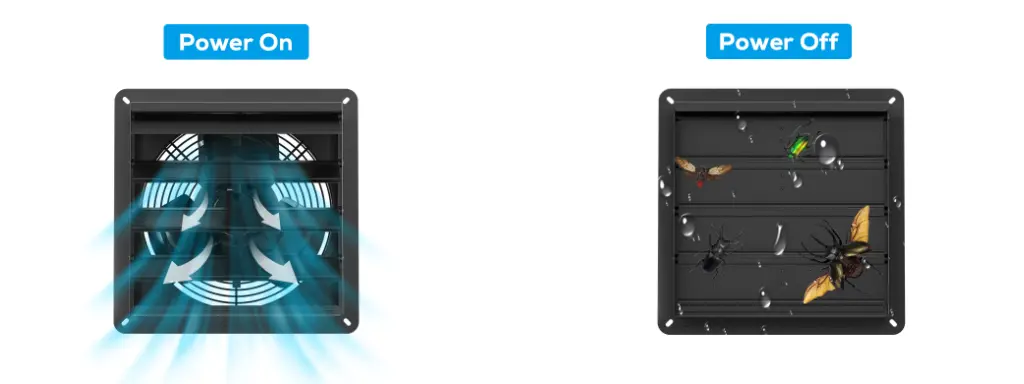
An exhaust fan eliminates stale air, high moisture, unpleasant odors, and pollutants from a room. Exhaust fans often serve kitchens, bathrooms, and storage areas by removing excess humidity and supporting good air movement. By discharging interior air to the exterior, these fans help avoid mold, lessen unpleasant odors, and reduce temperature and moisture inside confined environments.
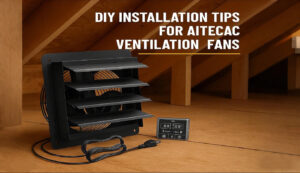
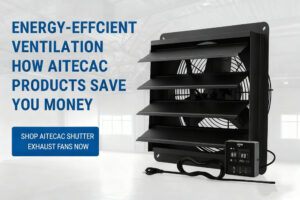
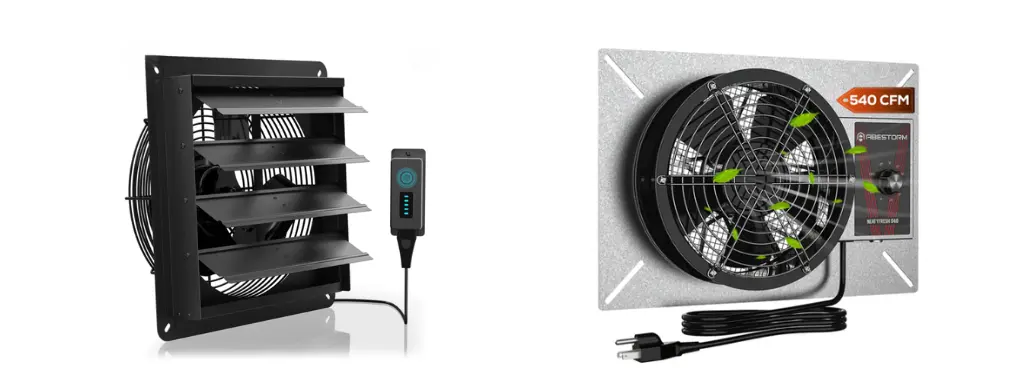
A Shutter Exhaust Fan is reliable for removing air from a specific space. The automatic shutters on these fans open when the device runs and shut when it stops, guarding against backdraft and dust.
How Do Exhaust Fans Work?
An electric motor inside exhaust fans turns the blades, which pull air in. House air moves into the fan housing and is discharged outdoors via a vent or duct. The fan’s operation controls humidity, expels smoke or steam, and refreshes confined spaces.
The 576 CFM Shutter Exhaust Fan is an example of achieving high airflow in a small design. This fan’s efficiency in moving air makes it well-suited for rooms dealing with moisture or odor problems.
Key Benefits of Exhaust Fans
- Humidity Control: It controls mold formation by minimizing the amount of moisture in bathrooms and kitchens.
- Odor Elimination: This removes odors from cooking, smoke, and other unpleasant smells.
- Air Quality Improvement: Removes contaminants from the air and improves indoor freshness.
- Compact and Affordable: The installation process is easy on walls or ceilings and is designed to fit certain rooms.
What is a Ventilation Fan?
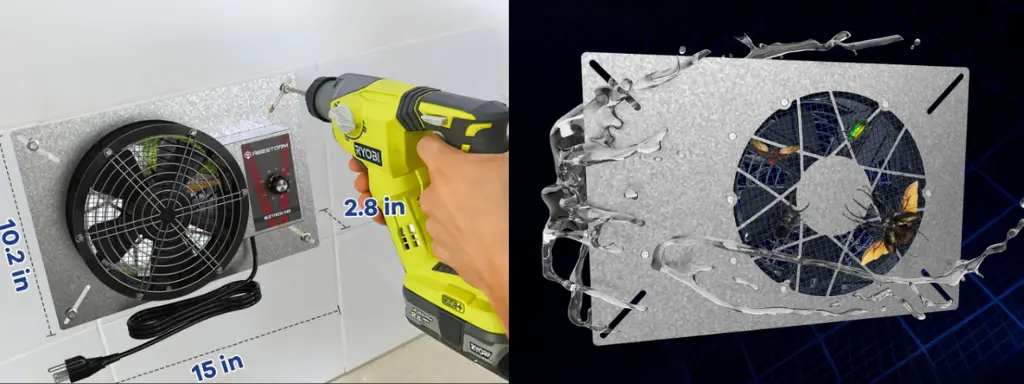
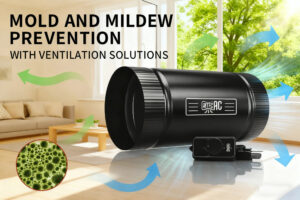
Unlike exhaust fans, ventilation fans are constructed to draw in outdoor air and move it throughout a building. Instead of focusing on just one room, they move air continuously to ventilate the entire building. Such fans are usually put in attics, ceilings, or industrial buildings where ongoing air exchange is required.
Exposure to high heat and a shortage of open windows make ventilation systems particularly valuable. They support good air movement, help control temperature, and decrease the number of airborne contaminants.
The Cabinet Exhaust Fan is recommended if you need an effective and sturdy way to move air. Although technically classified as exhaust models, cabinet fans are engineered to operate quietly while delivering efficient airflow across industrial or commercial spaces.
How Do Ventilation Fans Work?
Ventilation fans bring in outside air as they expel indoor air. This dual movement helps to keep indoor air fresh while keeping windows closed. These models are often placed in attics or ventilation ducts to ensure air circulation across rooms or floors. They are most effective in locations that need to combat heat or require ongoing air circulation.
Airflow is quantified in cubic feet per minute (CFM). A ventilation fan with a higher CFM rate is designed for large spaces due to increased airflow.
Key Benefits of Ventilation Fans
- Full-Building Air Circulation: Freshens the air in all rooms and areas throughout the building.
- Improved Temperature Control: Reduces indoor temperature by allowing outdoor air to flow inside.
- Energy Efficiency: These fans are economical, mainly when not used for refrigeration cooling.
- Pollutant Reduction: Reduces the amount of airborne contaminants by ensuring the air stays circulated and fresh.
Prevents Stale Air: Removes stuffy conditions and helps maintain a comfortable interior.
Where Are Ventilation Fans Used?
- Factories and Warehouses: To lower temperatures and keep the air moving throughout.
- Server Rooms: To keep electronic equipment cool by guaranteeing continuous airflow.
- Greenhouses: To keep humidity and temperature suitable for efficient plant growth.
- Basements and Attics: It helps stop the air from getting stuffy and moist.
- Large Homes or Buildings: For whole-house fresh air ventilation.
Ventilation Fan vs Exhaust Fan: A Head-to-Head Comparison
Feature | Exhaust Fan | Ventilation Fan |
Main Function | Removes stale air and odors | Circulates and refreshes indoor air |
Air Direction | One-way: indoor to outside | Two-way: draws fresh air in, pushes stale air out |
Use Case | Single-room or spot ventilation | Whole-building or multi-room airflow |
Installation | Mounted on walls or windows | Installed in attics, ceilings, or central ducts |
Air Movement | Moderate volume (lower CFM) | High-volume movement (higher CFM) |
Best For | Kitchens, bathrooms, and small rooms | Warehouses, offices, greenhouses, attics |
Choosing the Right Fan for Your Space
Choosing between a ventilation fan and an exhaust fan should be based on your needs.
- An exhaust fan is the right choice for handling humidity or unwanted odors in a bathroom or kitchen.
- A ventilation fan is preferable when handling airflow in a large building or maintaining consistent indoor temperatures in multiple rooms.
- Do you need strong air movement in compact areas? A shutter exhaust fan or a cabinet model can properly balance size, power, and energy consumption.
Consider the space’s size, the type of pollutants, and how you want the unit installed.
Final Thoughts
Exhaust fans and ventilation fans each have specific roles determined by the space requirements and are not substitutes for one another. Exhaust fans most effectively ventilate one place by removing stale or humid air. Similarly, ventilation systems manage air circulation throughout large areas where continuous air replacement is needed.